
General OBREAU Resources

The General Resources bring together videos, podcasts, articles, and other supporting materials for people who would like to deepen their understanding of the ideas and practices presented on this site.

Resources available here include:

Preparing for an Uncomfortable Conversation with OBREAU

You can use this approach with virtually any topic where there are differences of opinion, whether at work or outside.

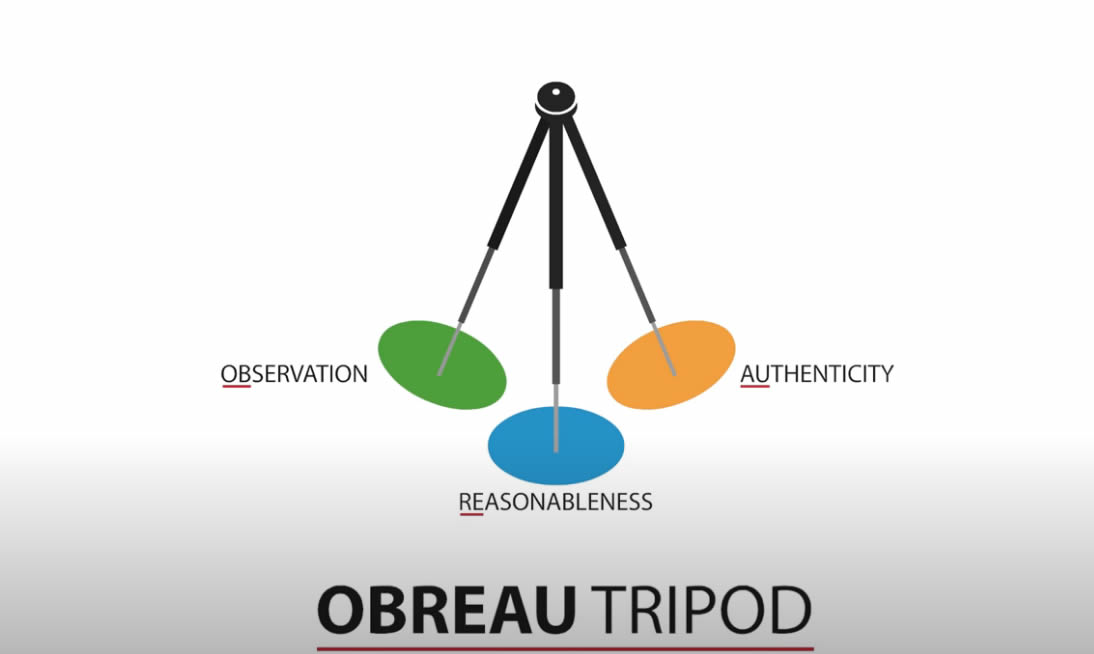
The two-part OBREAU video

 A sketch animation video outlining the basic OBREAU concepts. This is a good place to start if you’re new to OBREAU and could use a 7-minute introduction.

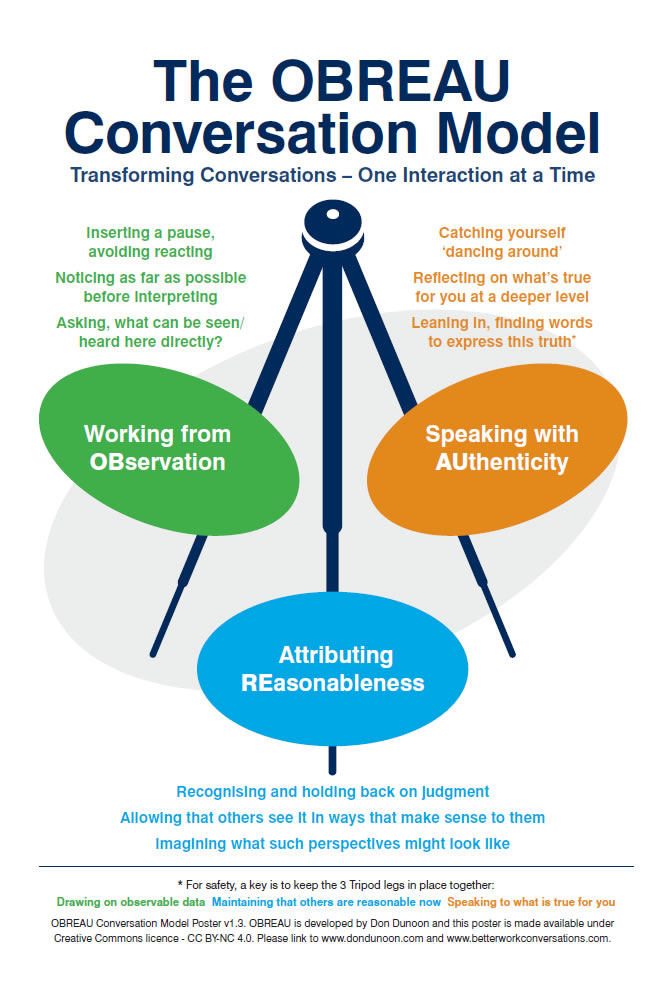
The OBREAU poster

A resource for you to use and share as a reminder of the basic structure and elements of OBREAU.

Article: “Mindful OD Practice and the Obreau Tripod”:

OD Practitioner Vol.46 No. 1 2014, pp. 18-25.Note that this article and some earlier resources refer to “the Obreau Tripod”. These days, while the tripod image is till utilised, the preferred term is “the OBREAU conversation model”, or simply “OBREAU”.

Webinar for ASQ (American Society for Quality):

This webinar, for ASQ’s Human Development and Leadership group, explores OBREAU as a resource for conversations on quality-related issues. The webinar followed a workshop Don Dunoon co-presented at the 2018 World Conference on Quality and Improvement in Seattle (which was among the highest rated sessions at the conference).

OBREAU at Association of Leadership Educators:

At the 2016 conference of the (US) Association of Leadership Educators, this workshop on OBREAU, presented by Dr. Eric Kaufman of Virginia Tech, was awarded ‘Outstanding Educator Workshop’. The workshop slides are here:

Using the video and poster together:

A set of questions to support teaching and learning about OBREAU drawing on both the two-part video and the poster.

The Two-Part OBREAU Video

In the video, total run time 7 minutes, Part 1 outlines essential OBREAU concepts and sets the scene for a case example featuring “President Maria Lon of the South Republic”.

Part 2 shows how President Lon might apply OBREAU in raising a challenging issue with the leader of the neighbouring North Republic.

If you find the video useful, please like and comment on each of the two parts on YouTube!
OBREAU Tripod

THE OBREAU POSTER

The poster supports the videos in outlining key elements of the OBREAU model and vital behaviours. It’s available either in A4 or Letter sizes. You can use the poster as you wish, within the provisions of the Creative Commons Attribution-NonCommercial 4.0 International licence: https://creativecommons.org/licenses/by-nc/4.0/
The OBREAU Conversation Model - Poster

USING THE VIDEO AND POSTER TOGETHER

Perhaps you’re a teacher in a university or (senior) high school, and you wish to increase your students’ awareness and abilities in conversing on uncomfortable topics. These might be of a more personal nature (say, giving feedback to a classmate) or “bigger”, potentially controversial issues (say, access to affordable housing in the local environment).

Alternatively, you might be a team leader in an organisation wanting to build the quality of interaction among your team members, and maybe between them and customers or other stakeholders.

In these situations – or in any number of others – you might consider sharing the videos and poster and then hosting a group conversation on the ideas presented and their potential applications in your context. Some questions to prompt discussion are suggested in the accompanying panel.

Sharing the resources and hosting a conversation will likely at least spark reflection among your learners on how (or whether) they show up in uncomfortable conversations and what they might do to improve their effectiveness.

If you introduce the resources in a group setting, be sure to bring the discussion back to the conversations you and group members need to have. This will help make the resources “real” in participants’ own settings.

Obviously, a session to introduce OBREAU will be only a first step in building participants’ capabilities in conversating on difficult topics – but it might be an important starting point.

If you find the video and poster useful, it would be terrific to hear about your experience. We won’t publish your responses without your permission. Please let us know how you go here.

From the videos, some discussion topics might include:

  • Do learners recognise the default behaviours of reacting, judging and dancing around?
  • Can they give examples from their own experience?
  • How can these defaults impede safe and productive conversations?
  • What do they understand to be the difference between observation and interpretation?
  • Can they recall an example of the difference from the video?
  • Why is focusing on observation crucial?
  • What is meant by attributing reasonableness in an OBREAU context?
  • How is attributing reasonableness demonstrated by President Lon in the video?
  • Why does attributing reasonableness matter?
  • How do learners understand authenticity in connection with OBREAU?
  • What does President Lon say that might be authentic for her?
  • Why might speaking with authenticity be important for learners in their own lives?
  • Why is OBREAU usefully thought of as a tripod structure?

Find Out More

Contact Don Dunoon to talk or find out about any of the resources described on this page – or anything else of interest elsewhere on the site.