About the approach
Improving the Quality of Thinking and Working Together
This site is concerned with how people can think and work together more effectively when the issues they face are difficult, uncertain, or conditions are highly demanding.
That concern has emerged from decades of working with organisations – and from being curious about how so many capable and experienced people can find it hard to have those essential conversations.
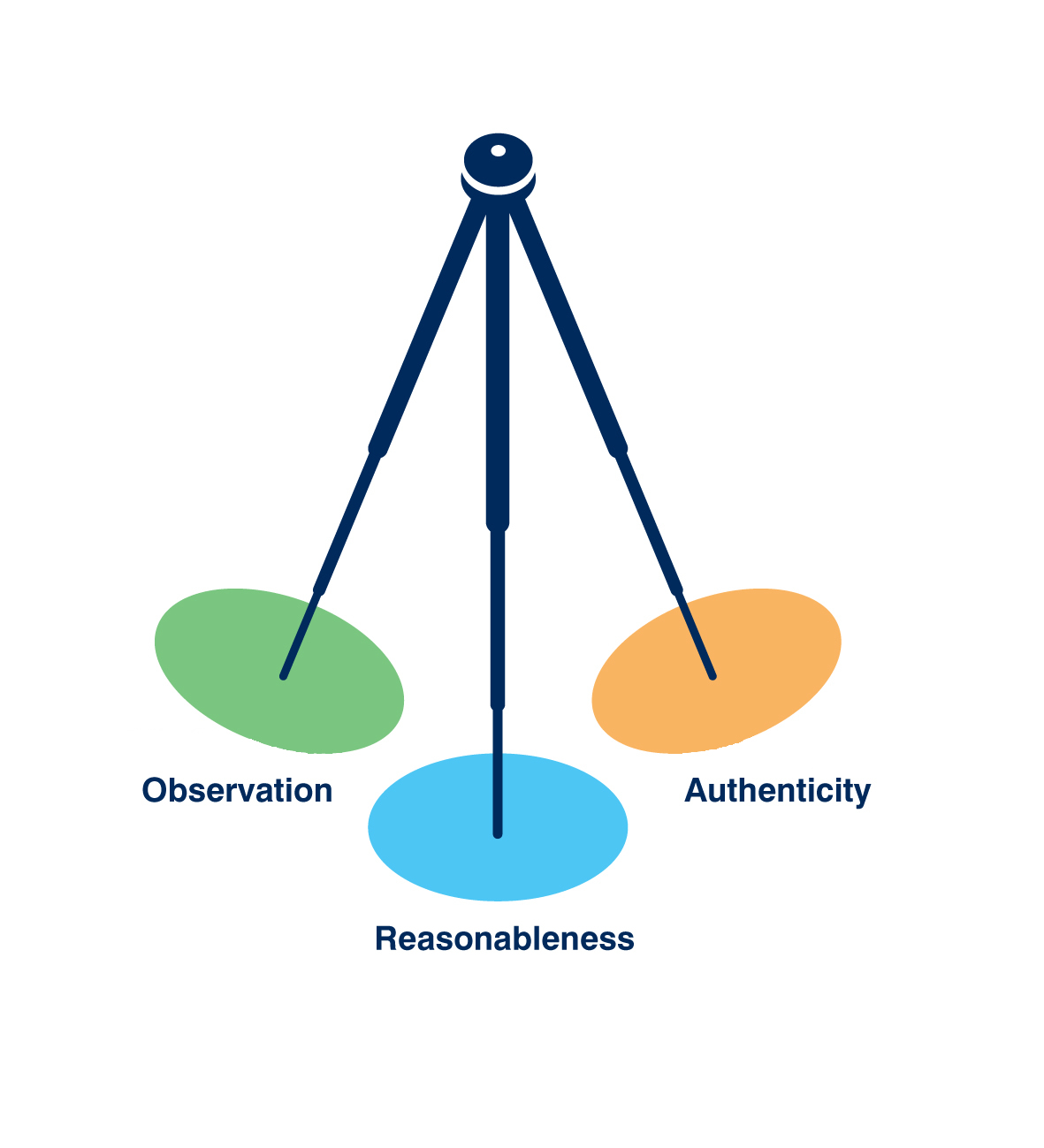
One of the outputs of all this work has been the progressive development of the OBREAU practices. Some of the ideas behind the practices – observation, reasonableness, and authenticity – are outlined on this page.
Creating Space When the Pressure’s On
When under pressure, it’s easy for people to react quickly, latch onto an interpretation, defend their position, scapegoat others or avoid saying something potentially important. Trouble is, doing so can narrow the quality of thinking, just when broader and deeper inquiry is most needed.
The resources and approaches presented here are intended to help people create a little more space for that inquiry.

Leadership as Work, a Practice
A starting point is that leadership can be usefully understood in ways other than as particular people occupying “leadership” roles.
Leadership can also be thought of as a practice – work that people contribute to, individually and collectively, when they help a group engage more thoughtfully on things that matter.
This might involve, e.g., questioning an assumption, drawing attention to something overlooked, introducing a fresh perspective, voicing a difficult issue, or helping people reframe what’s happening.
These contributions can come from anyone. Such inputs are different from the more familiar work of managing, deciding, planning and getting things done.
The distinction matters, as while this familiar, more action-oriented work is essential, it tends to dominate. Sometimes moving too quickly towards solutions can mean a critical issue has been missed or not well understood.
Some of the influences behind the approach:

OBREAU
Practices for Thinking, Reflection and Dialogue
The OBREAU approach developed from the idea that, if individuals and groups are to do more leadership work and not be swept along by the dominance of everyday problem-solving, they need support. It’s in demanding, pressured situations that the quality of attention and inquiry is especially at risk.
OBREAU is designed as three practices to support leadership action (though applying OBREAU does not require making connections to leadership; it can be used in any number of contexts):
Observation – attending more carefully to what can actually be observed without moving too quickly into interpretation.
Reasonableness – loosening judgment and making a real effort to understand how other people might see an issue, and why they might see it that way.
Authenticity – finding ways to say what they believe needs to be said, including things that might otherwise be avoided or danced around.
These are deliberately described as practices rather than competencies or personality characteristics. They are things people can do – however imperfectly or briefly – in the midst of regular work.
They also provide a basis for the resources on this site, including personal and collective pauses, approaches to dialogue and collective sense-making, as well as the work that Don Dunoon does with clients.
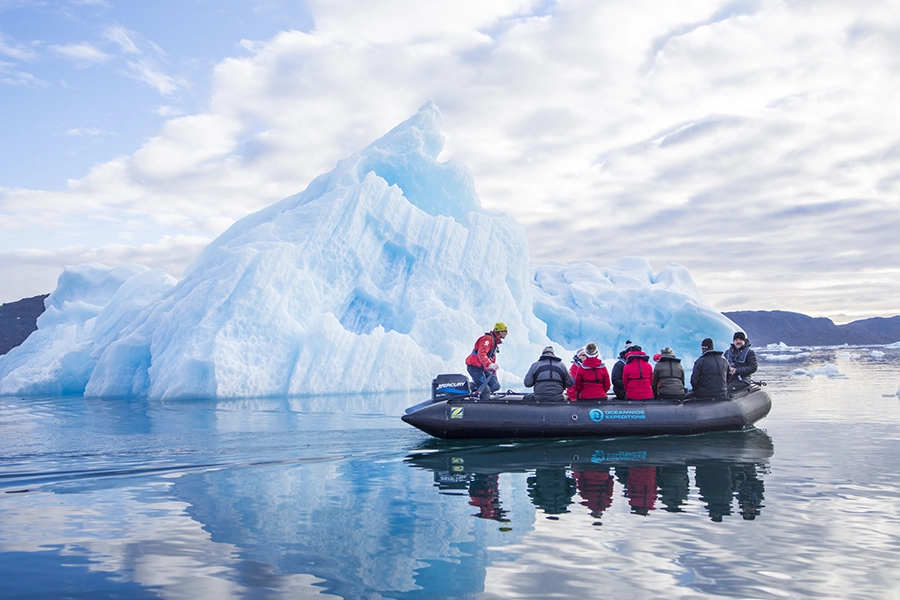
To gain a sharper sense of the three OBREAU practices, imagine an issue as represented by an iceberg, observed by a group of people in a small boat.
Observation
The surface of the iceberg represents what can be seen directly. That might seem straightforward – but the complication is that we tend to react and begin with interpretations: things that can’t be seen directly and, metaphorically, sit below the waterline. “There’s a lack of communication” is an interpretation, just as is “his behaviour was inappropriate”.
The Observation practice is based on the idea that if we can observe more carefully and fully – while recognising our own lenses – we have a clearer, more grounded basis for individually and jointly making sense of an issue. Just as people in the boat will each see a somewhat different facet of the iceberg, what we notice is influenced by where we stand and what we bring to the situation.
Importantly, when we begin with observation rather than interpretation or opinion, we are better able to consider different interpretations. This helps loosen up our thinking and supports adaptability. We can also engage more constructively with others because we are less likely simply to react to them and potentially trigger defensiveness.
A useful question is: What can we actually observe?
Reasonableness
Any contested issue will involve other stakeholders. They may see different aspects of the iceberg from their own position, but much of what shapes their understanding will also remain below the waterline, unspoken and maybe beneath conscious awareness: their beliefs, assumptions, interests, aspirations, concerns and perhaps feelings that they do not openly share.
As a mental shortcut, we tend to attribute motives and intentions to others – often judging them adversely: “They don’t want to change.” “They’re only looking after their own interests.” “They can’t be trusted.”
The difficulty is that once we are judging others negatively, it becomes harder to test our interpretations with them without prompting threat or defensiveness – from them and perhaps from us as well.
The Reasonableness practice starts from the proposition that other people’s responses will generally make sense to them, given what they see, believe, assume, want or fear. We may not know what those things are. But, drawing on what we have observed, we can develop tentative ideas about what might be real for them – treating these as hypotheses to explore rather than conclusions about them.
We can then potentially test our interpretations with them, provided we do not lapse back into judgement.
In doing so, we are exploring what is below the waterline: territory that is normally hidden and can sometimes feel threatening. This has implications both for the language we use and for how we think about and voice our own perspective.
A useful question is: What might make sense from their perspective?
Authenticity
If we can explore other people’s ways of seeing and understanding an issue, we have a much better prospect of building shared understandings. But if we want others to be more open and forthcoming with us, we also need to bring something genuine of ourselves into the interaction.
Authenticity, like Observation and Reasonableness, is a practice – something we need to work at. Most of us have learned to appear open while being quite circumspect about what we reveal of our underlying thoughts, concerns and feelings.
Authenticity in OBREAU is not about “putting it all out there”. It means bringing forward what seems genuinely true, relevant and important to say – and considering how we can frame it so that others have a reasonable prospect of hearing it.
It is not about being nice, deferential or unblinkingly positive. Sometimes authenticity means raising something difficult or uncomfortable that might otherwise remain unspoken.
The Authenticity practice also requires us to remain attentive to Observation and Reasonableness. Rather than simply offering an unfiltered account of what we are feeling, we ground what we say in relevant observable data and in thoughtful consideration of what may be true for others. We then express our genuine response to these things, as far as we reasonably can while remaining sensitive to the particular context.
A useful question is: What is important for me to say?
Using the three practices together
The three practices are most powerful when used together: observing more carefully, becoming more curious and less quick to judge, and saying more of what genuinely needs to be said.
Here OBREAU has been presented mainly as supporting thoughtful and constructive engagement by individuals in their practice of leadership – whether or not they hold a formal leadership role.
But OBREAU can also support collective reflection, dialogue and sense-making. The Resources and Working Together pages show ways that groups and individuals can use these practices to improve the quality of thinking and engagement around challenging issues.
Why “Effective Under Pressure”?
Pressure is important because it tends to magnify our defaults.
We react rather than observe. We judge rather than inquire. We avoid, soften or work around things that may need to be addressed directly.
These tendencies will probably always be with us to some extent. A challenge, though, is to become a little better at noticing them and, where it matters, choosing another way of responding.
This is particularly relevant when people are working with complexity, disagreement or uncertainty – circumstances in which there may be no obvious or best answer, and where the quality of the conversation can significantly shape the possibilities people see.
About Don Dunoon
The ideas and resources on this site have been developed principally by Don Dunoon, drawing on his more than 30 years of work in leadership and organisational development.
His earlier work, including In the Leadership Mode (2008), explored the distinction between management-oriented action and leadership as relational work. The work presented here builds on that interest, with a stronger focus on collective sense-making and how groups and individuals can engage productively and safely, including when pressures can push us back into more reactive and defensive responses.
Don continues to develop and test these ideas through workshops, other work with organisations, dialogue with professional colleagues, and supporting teachers to introduce OBREAU to their students.
Sydney-based, Don conducts paid professional work through his company, New Futures Pty Ltd.
The intention of this site, however, is broader than promoting Don’s consulting services. It’s to make available ideas and practical resources to help people experiment with different ways of thinking and working together – and to keep developing those ideas through use, reflection and conversation with others.
Disclosure: While the site reflects Don’s experience and insights from over three decades of consulting and thinking in this area, it has also benefited from a continuing dialogue with ChatGPT. This includes the Resources page and the content thereon. Don, however, takes full responsibility for all the site content and expression.

What People Are Saying
Sandy Pagotto is Director of Strategic Solutions with CHA Learning, part of HealthCareCAN (Canada)
Gena Major

I experienced the effectiveness of OBREAU back in 2018-19 when I was involved in strained conversations with our union leadership regarding the introduction of a new technology for bus pre-trip inspections.
Using the method helped me better understand what was concerning the union leadership and aided me in gaining perspective on my own reactions, interpretations, and assumptions. As a result, I was able to engage with the representatives more positively than I might have previously. Beyond that experience, I can recommend OBREAU as a structure for illuminating almost any contested topic in a workplace and creating a basis for useful action.
I can vouch for Don Dunoon as a workshop presenter having seen him in action in his joint session at the World Conference on Quality and Improvement in Seattle in 2018. I presented on OBREAU with Dr. Rick Van Doel at the same conference, in Fort Worth, in 2019, and the participants seemed to share my view about the power of OBREAU.
Trisha Gott

Since 2019 I have been engaged in work with Don Dunoon and specifically, the OBREAU Tripod. For a practitioner committed to leadership learning through adaptive practice the OBREAU Tripod offered an avenue into adaptive work on the personal and organizational level. I have since shared it with students, faculty, and staff from across the university with great response. The tool provides a meaningful process and practice for navigating difficult conversations while maintaining commitments to adaptive practice and leadership.
Clare Drake
I have had the pleasure of working with Don Dunoon since 2017 in the leadership and management development space for our organisation with a focus on improving relationships through conversations and building leadership capability.
Don has a switched on and approachable style. In his sessions he listens attentively then offers questions or challenges according to what he has heard. The way he uses language, especially in the OBREAU Tripod model, to create understanding and raise the level of thinking in a group session is impressive. His level of knowledge in leadership and communication within the business context is exceptional. Match this with his ability to hold space for people to grapple with shifting mindsets from technical to relational and adaptive makes his approach a deep and enriched learning experience.
Exploring the OBREAU has been a game changer for many of the managers in our organisation. Having a majority technical and scientific workforce has sometimes meant the more human side of leading has been undernourished, which is why OBREAU has worked so well in our context. It has given a framework for understanding and a tool to refer to but also just to try and understand the self and communication on a different level.
The use of blended learning as part of the exploration of OBREAU has meant that the understanding has deepened, and practice enhanced because the participants can come to the workshops raring to go. I was able to be trained as a facilitator of these sessions and have only just finished leading my first cohort through. It was great to see how the online modules got people thinking first then in the sessions they were sharing of how they had been experimenting with the concepts and what had and hadn’t worked.
The feedback we continually receive from the programs Don has designed, delivered and worked with us on has always been a cry for “we want more”!
Human Resources Manager (New South Wales government agency)
Don has presented many leadership workshops with staff across my organisation to embed a culture of staff thinking about leadership and their role as leaders and how they can make a difference. I love it when I go into a manager’s office and they have a picture of the OBREAU Tripod on their wall or when a staff member tells me about a challenging situation where they framed their discussion around the Tripod.
I have attended many of the workshops as a sponsor and always learn something new and hear something I have never heard before. Don is nurturing and caring in his delivery, always working at coaxing involvement from the most introverted of staff.
Read more “Human Resources Manager (New South Wales government agency)”