OBREAU Resources
Don Dunoon says…
“My aspiration is to see the OBREAU conversation model used by millions of people worldwide each year to support uncomfortable interactions and dialogue. To that end, I’m making available free-of-charge the resources on this page under Creative Commons Attribution-NonCommercial 4.0 International licensing. I hope you find these resources useful, and I’d love to hear about your experience in using them. Please get in touch using the contact information at the bottom of this page.
All the best in making OBREAU work for you!”
RESOURCES FOR INDIVIDUALS
Intro paragraph
GENERAL OBREAU RESOURCES
Intro paragraph
Resources available here include:
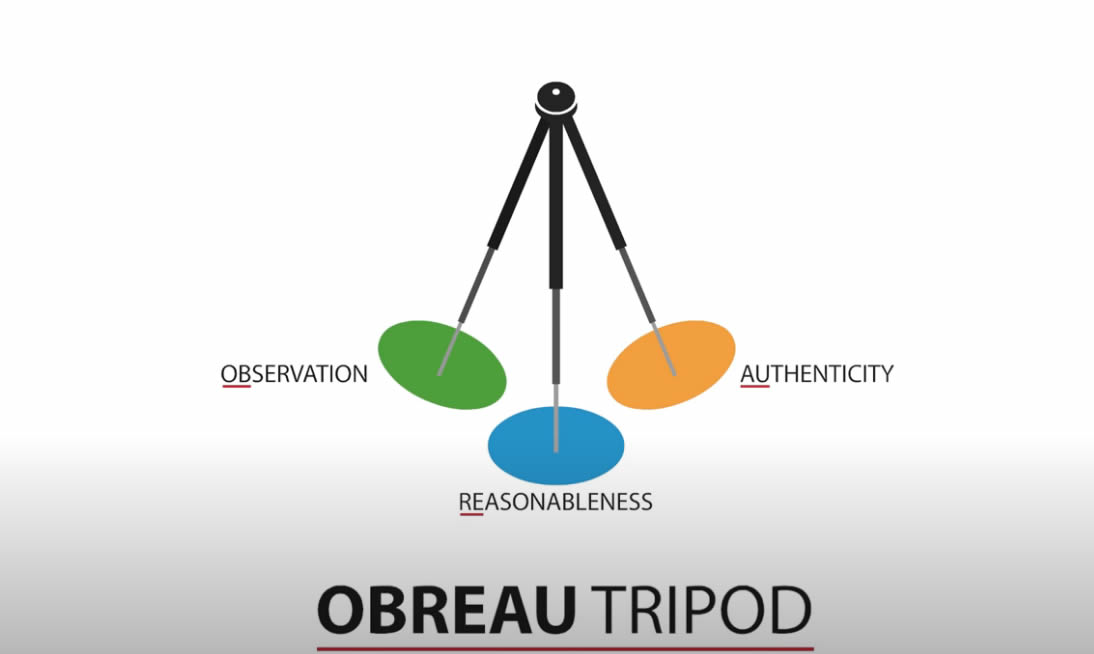
The Two-Part OBREAU Video
In the video, total run time 7 minutes, Part 1 outlines essential OBREAU concepts and sets the scene for a case example featuring “President Maria Lon of the South Republic”.
Part 2 shows how President Lon might apply OBREAU in raising a challenging issue with the leader of the neighbouring North Republic.
If you find the video useful, please like and comment on each of the two parts on YouTube!
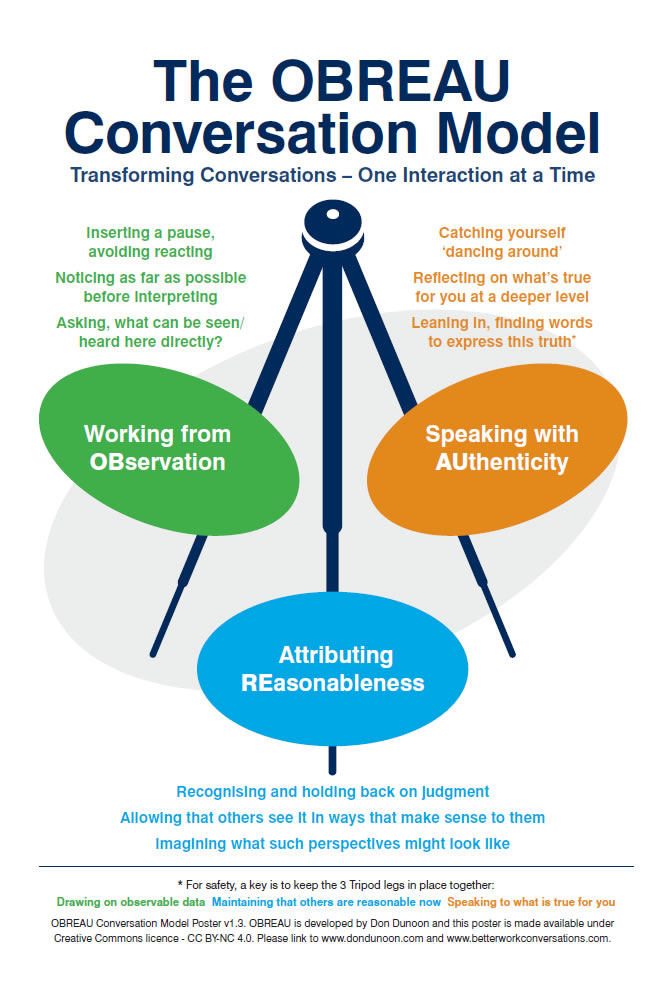
THE OBREAU POSTER
The poster supports the videos in outlining key elements of the OBREAU model and vital behaviours. It’s available either in A4 or Letter sizes. You can use the poster as you wish, within the provisions of the Creative Commons Attribution-NonCommercial 4.0 International licence: https://creativecommons.org/licenses/by-nc/4.0/
Perhaps you’re a teacher in a university or (senior) high school, and you wish to increase your students’ awareness and abilities in conversing on uncomfortable topics. These might be of a more personal nature (say, giving feedback to a classmate) or “bigger”, potentially controversial issues (say, access to affordable housing in the local environment).
Alternatively, you might be a team leader in an organisation wanting to build the quality of interaction among your team members, and maybe between them and customers or other stakeholders.
In these situations – or in any number of others – you might consider sharing the videos and poster and then hosting a group conversation on the ideas presented and their potential applications in your context. Some questions to prompt discussion are suggested in the accompanying panel.
Sharing the resources and hosting a conversation will likely at least spark reflection among your learners on how (or whether) they show up in uncomfortable conversations and what they might do to improve their effectiveness.
If you introduce the resources in a group setting, be sure to bring the discussion back to the conversations you and group members need to have. This will help make the resources “real” in participants’ own settings.
Obviously, a session to introduce OBREAU will be only a first step in building participants’ capabilities in conversating on difficult topics – but it might be an important starting point.
If you find the video and poster useful, it would be terrific to hear about your experience. We won’t publish your responses without your permission. Please let us know how you go here.
From the videos, some discussion topics might include: